Login

interview with the berliner luft duo

Berliner Luft
the Residence Gallery
03-26.06.2011


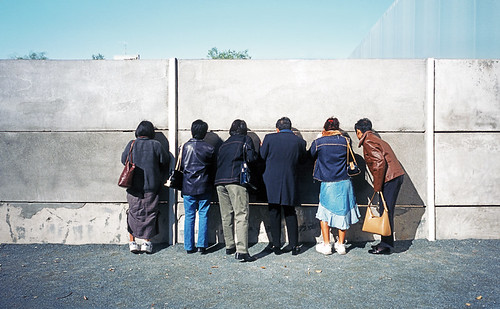
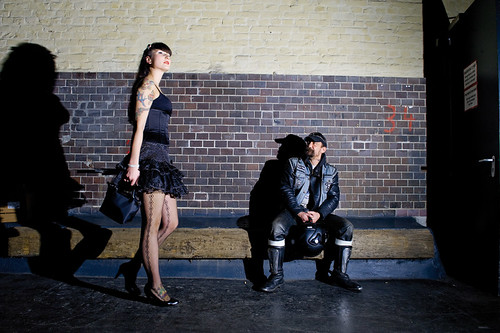
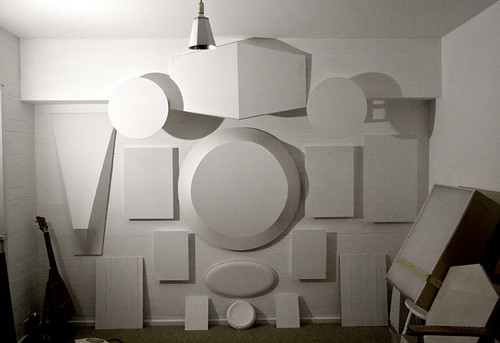
The Wall (All rights reserved by the photographers)
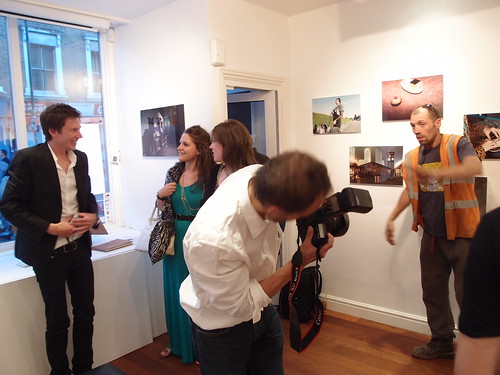
The photographers with the guests in the private view opening evening

Famous for its lively art scene, Berlin is undoubtedly Europe's capital of art production over the past decade. Residence Gallery has brought a photography show from Germany to London this month featuring the reborn German capital in the eyes of two young(-ish) german photographers Benjamin Tafel (BT) & Dennis Orel (DO).

Alexanderplatz (All rights reserved by the photographers) 

Originally from Stuttgart and studied visual communications in Weimar, both Benjamin & Dennis are award-winning members of the Art Directors Club, which is a global organisation for visual communication professionals. Here is a short interview with the two photographers about their exhibition -

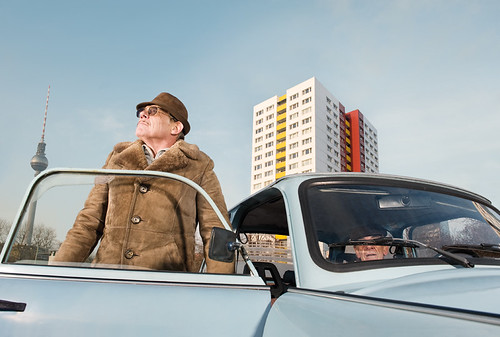
Coming to Berlin (All rights reserved by the photographers)

Q1: Who were the people featured in the photos? Are they residents of the neighbourhood or just models? Do they have a say in how they are featured?

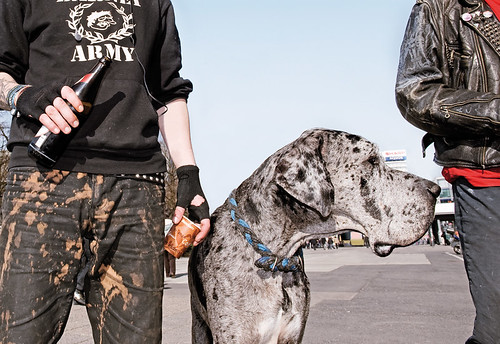
A: All the people we are shooting with had a background or connection to the situation or location. Our aim was to stage the situations but never lose the connection to reality. The coincidence plays an important part in our work to keep the people in their part of the real life and not to fall in a pose like a fashion model. Our purpose: Everyday life is theatre.

Girl Passing by  (All rights reserved by the photographers) 
 
Q2: There's an overall tone in all the photos - colours with some kind of hard contrast (or even conflict) and a deliberate use of flash. What is the reason for this take?

A: The use of a calculated composed light is our way to shape out the location or the people to gain a new interpretation out of it. Its a  way of remodelling it with light to stage a situation which shows the viewer a far side. Using the light in this way boosts our graphical view that we use in our work.

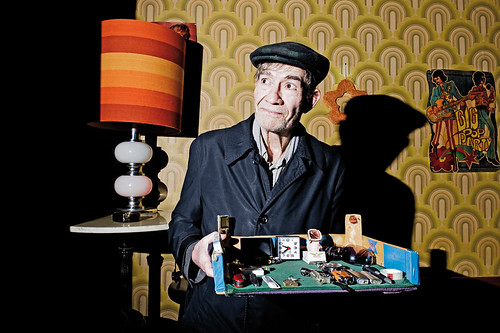
Konrad Tönz (All rights reserved by the photographers) 

Q3: If you have to pick your favourite neighbourhood in the city, which would it be?

DO: One of the interesting places right now is in the western part of the city. The bird view from the Top of the Pan Am Lounge. To one side into the penguin area at the Berlin Zoo and to the other the naked people jumping in the rooftop-pool of the "Europa-Therme".

BT: It depends what you're looking for. The southeastern part of Kreuzberg is one of the hotspots at the moment. You still find a neighbourhood that has grown over decades, but a lot of new spots and young creatives move there. The mixture you find there is the key. Turkish greengroceries next to young galleries next to a typical Berlin drinking hole. Because everyday life is theatre!


Video by the Residence Gallery

The duo also has another photo exhibition currently in Kunstschwimmer Berlin called Hundesalon running till 08.07.2011.

Girls at Stutti (All rights reserved by the photographers) 


View Larger Map


*****

Further Readings -
Page: Official facebook Page for Berliner Luft
Page: Official Page of Benjamin Tafel
Page: Official Page of Dennis Orel

interview with ben ashton


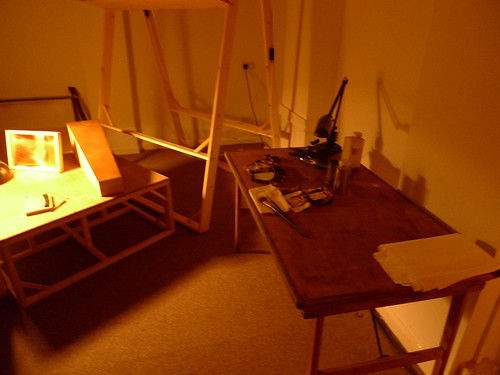
A year ago, Simon Oldfield presented Ben Ashton’s first solo show in a former monumental stonemasons at 17 Osborn Street. A year on, Ben held an open studio last month in his Bloomsbury studio to let the public see his preparation of his next show. We visited both events and did an interview with the artist -


1. Did you plan your first solo show with all the different formats (painting, photography, installation) featured in the beginning?

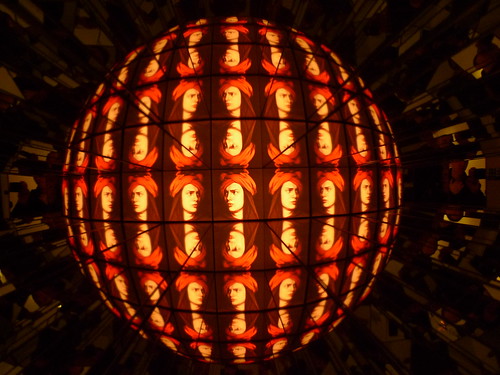
Ben Ashton (BA): I started my last series of work by photographing different poses/attitudes with a mind to using the images in different ways. Some of the material was immediately translated into painting whilst others either stayed in their original format or were turned into optical installations. It was only toward the final weeks leading up to the exhibition when I started building the larger installation pieces that fused the whole show together. I feel that from the initial photograph my work follows a gradual freeform evolutionary path till it reaches its final destination.


2. Are there any particular influences throughout your artistic career, e.g. other artists, certain types of music, certain social phenomenon etc?

BA: I now have a very specific set of influences that I have narrowed down through the years. I try not to be overly influenced by other contemporary artists as I feel there is a risk of regurgitating what has too recently been done. I rather immerse myself in different parts of history, be that art history, the history of science or technology and innovation. I have been particularly interested in Victorian discoveries such as Stereoscopy and the Kaleidoscope. I meld these parts of history with my view of the contemporary world, often bringing to light things that have been lost through time.


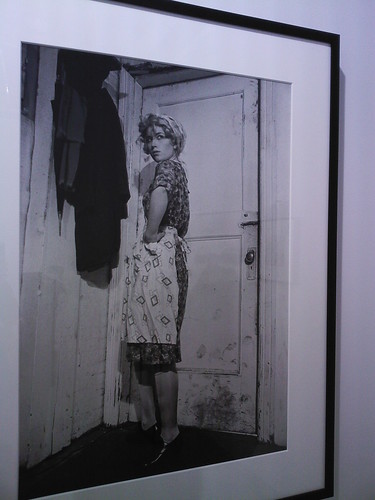
cindy shermanCindy Sherman

3. Do you view your works to Cindy Sherman’s, as both of you are attempting to portray another person through yourself?

BA: My last series could definitely be compared to Cindy Sherman’s even though she has never directly influenced me. We both have used ourselves in the appropriation of other peoples’ images. In my next series of works I have moved away from playing out scenes from art history and instead my influence is much harder to place. In the context of the question, I feel that this is what separates me from artists like Sherman.


Artist's residence in the gallery during Ben's first solo show with Simon Oldfield

4. The curator/gallery owner mentioned that you are working in-residence during your first solo show. How does it influence you to have feedback from the audience directly or become a live exhibit of your own?

BA: I have always worked within my shows. I feel that it is important to show that the creative process never stops and I believe that it is interesting for the public to watch the show evolve over time. It is important for me to get feedback from the audience as I spend most of my time in complete solitude. I also think it is a great chance for the visitors to receive a different type of input directly from the artist and I hope this makes the whole experience more personal. The gallery is often perceived to be a cold and clinical environment and I wish to change that misconception.


bloomsbury studioA wall in the artist's studio during the Bloomsbury Festival Open Studio event

5. Do you have any future plans? What’s next?

BA: I am currently working toward a solo show in February 2011. This show focuses on my studio as a domestic environment, taking its starting point from the era of Dutch Genre paintings.  I am interested in the confined environment that I work in and the close interaction with my wife who also inhabits the space. I feel this introspective view of our life breaks down the barriers I had built up in my work and gives a very honest account of my reality.


Thank you Ben for the interview - looking forward to the show next year!

*****

Further Readings -
Twitter: @benashtonart
Page: Official blog for Ben Ashton's residence studio
Page: Ben Ashton's profile at Simon Oldfield Gallery online
Page: Not too late for a trick or treat - Ben Ashton Exhibition at Simon Oldfield, by Pamela McMenamin for artist-in-residence-pamc.blogspot.com

Marina Abramović's twitter interview

14.10.2010

Lisson Gallery has chosen the Frieze week to launch a twitter interview with their 'new' artist Marina Abramović. It looks like a successful event, with the artist spending an hour answering questions posted by tweeple (people who uses twitter). We compiled the interview below from tweets under the #marinalissonlive hashtag - there may not be the 100% correct sequence of questions & answers since it is not really that clearly arranged online, but it should give you an idea of what's been asked and how she thinks of those topics nevertheless.

Q: (Nicholas Logsdail, founder of Lisson Gallery) How do you feel about your first Lisson show?
A:  I feel great about my first show at Lisson. It is the right moment. Nicholas asked me last year if I could be his Louise Bourgeois. 

Q: (Nicholas) How do you feel about the future of Performance?
A: Every time there is a economic crisis around you have to start from nothing. I always like to confront my fears. I am staging my fears in my performance. It is also important to explore humor in art.

Q: (@Squirrelala) Hi Marina, have you ever done an impromptu art performance or is it always planned before?
A: I've never done any performance spontaneously. I believe in preparation. I like to see the space before hand.  I don't believe in performance as entertainment.

Q: Do you think the re-performing of historical performance work is necessary for a new generation to experience them?
A: I believe that performance is a living form of art.

Q: Marina, what is the first performance that you remember doing? The last major show you had in the UK was at MoMA Oxford in 1998, why has it been so long since your return to the UK?
A: In many ways there was no time for performance art previously. It was more about putting artists here on an international platform rather than bringing new artists to the UK.

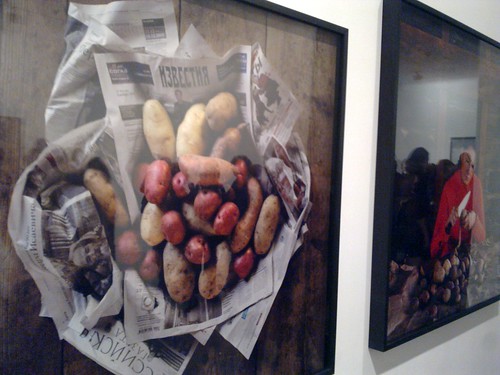
Q: (@londonart - that's ours!) The 2 pieces with onion & potato with Marina - why she uses New York Times as wrap on one & russian paper another?
A: Russia was very present in my culture. Potatoes have so much to do with Russia.

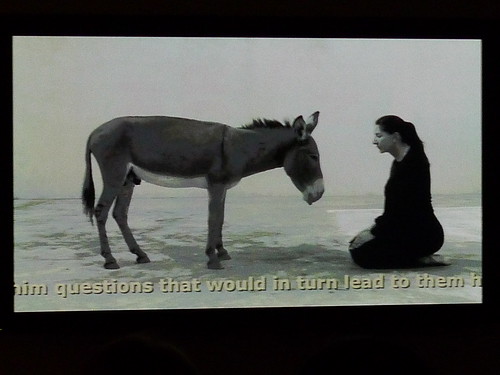
Q: (@CreativeLondon) Marina, how do you get a lamb/donkey to sign a model release form?
A: I love this question. I didn't! I love working with the donkey - they are known for their emotion. They are stubborn like me!

Q: How have you spent your time recovering from your MoMA performance?
A: It means so much to be around nature. It was hard to go back to normality. This performance has affected me more than any.

Q: (@DANIELjonKING) Many participants in "THE ARTIST IS PRESENT" view you as a mother figure. Do you consider them as your children?
A: I see my work as my children. For me it was important to be in the present for my MoMA performance. I gave unconditional love to total strangers.

"Marina Abramović: Live at MoMA" by MoMAVideos

Q: What was the most special moment of your MoMA performance?
A: For me the special moment of my MoMA performance was an old woman who came and gave me a shawl as a sign of friendship. It was a symbolic appreciation of my work. It made me burst in to tears. There was a very spiritual element to the work. Also important for me was that the guard for the performance waited and came to sit in front of me. 

Q: (@OperaCreep) Marina, do you think that performance art can live outside the realm of art galleries? Could flashmobs be its future?
A: What are these flash mobs? This is recent for me but I think its a great way to go. It is something I never use in my life because my is very real. I'm also a fan of second life. Flash mob is a big possibility.

Q: Where did you make most of the work in this show?
A:  I needed to do something which is going back to simplicity, which i would have never been able to do if I had not made these works in the 70's

Q: (@annieh_artist) Does performance art need an audience?
A: Absolutely yes. Any performance without an audience doesn't have the same energy. The work is the audience.

Q: Can you tell us a joke?
A: Oh yes. How many artists do you need to fix a light bulb? I don't know I was only there 6 hours!

Q: (@gtvone) Marina, as a performance artist - how much input do you have into how your art is captured, technically?
A: In the beginning I never knew about control. Now I have complete control which is extremely important. To make such a performance you need to be invited and I have never been invited.

Q: Do you think you will ever repeat the performance in another part of the world.
A:  I would never say no to this but right now I can't imagine it because it was only three months ago. I need time to see if I have the strength to do this. 

Q: (@DANIELjonKING) Valuable friendships developed amongst many queuing for THE ARTIST IS PRESENT. Did you ever imagine this?
A: Why did Johnny Depp not ask anything? A community developed around my work at Guggenheim and this developed with the performance at MoMA. It was really emotional because people involved in the performance really felt it would change their lives. 75 people came 10 times to see me at MoMA.

Q: How do you feel when looking at work you made over 35 years ago in the 1970's?
A: It makes me very tired actually. It is the only time I feel old. I should really move on and I am always trying to move on. Let's say I have a healthy distance.

Q: (@yacabo) Do you believe that there is a star system in contemporary arts as well like Hollywood?
A: Oh definitely and I am against that. Artists should not be an idol. The work of art is important not the artist.  I have just been asked by a film maker in Russia if I can play the lead role a film. I refused. That was my big chance to get to Hollywood.

Q: Can I come meet you?
A: 
Who are you?

Q: (@rowanhull) How important is time in your work?
A: Time is everything. I really believe long duration is important in a work of art. It can change you emotionally and physically.

Q: Will your show from MoMA tour to anywhere else?
A: 
What is this 'back-up' question? I just got information yesterday that it is going to be in the Garage Moscow in September 2011

Q: Why and how do you think people relate to your work?
A:
 My concern is to give everything I have to the audience and it is up to them how they want to deal with that. There are so many different reactions to my work. The ones who participate see something happen because we have shared the same experience. The audience are free to take what they want from the work. The public are an important part of the performance. 

Q: (@DANIELjonKING) if you could choose anyone (living or dead) to play you in a film, who would it be?
A: That is a good question. I need some time to think. I would like to be played by Maria Callas because she would understand me the best. Or I think it would be Anna Magnani. She's italian and she understands drama and emotions. 

Q: (@IsabellaBurley) When will you stop producing work?
A: For an artist is is very important to know when to stop, when not to repeat oneself and when to die. I should not stop producing work now. 

Q: (@delfinafdnThe Abramavic Studio at Location One is a powerhouse for development. Do you think residencies are still important in this mobile age?
A: I think artists today are modern nomads and residencies give them the chance to go from place to place. With residencies you are exposed to a new environment which is very important for artists making new work. 

Q: (@annieh_artist) Is performance art the only unmediated art form?
A: Before there was a bit of photography but not any more. Performance now has a chance to become mainstream art.
Q: How are you finding this interview process
A: It is very fancy. I've never done Twitter in my life. I'm not good with technology. I had a washing machine for one year which I couldn't use and it was only pressing one button! This is like science fiction for me. 

Q: How does your early work relate to what you are doing now?
A: 
I could never do what I do now if I didn't do early work. I investigated my body limits now I investigate my mental limits. So what do you do in this office? Is this only a Twitter room? And are these your Twitter girls? Is the final question 'Where do you want to die?' It is really important to start from the beginning to see where everything comes from. My biography would be great to understand my childhood. Everything comes in to place after that. You have to take something personal and make it universal. 

Q: (@dhmonroy) Dear Marina, who artist influenced you, when you begining as an artist?
A:  I really don't think I was influenced by an artist. Being influenced by another artist is like being second hand. Artists that I admire are Yves Klein, Rothko, Duchamp and John Cage among others. So now I've done Twitter for the first time in my life!

Marina Abramović private view 12.10.2010 by Lisson Gallery

See our review on her show at Lisson Gallery here

*****

We will be covering the official Frieze Art Fair in the upcoming posts - stay tuned.

interview with david schmidt


London-based David Schmidt has been showing his works around the UK as well as the continent via Affordable Art Fair & Art Helsinki. You can see his works in the upcoming London Fashion & Art Event in ICA (21.09). He talks to us about what inspries him, how commercialism and individual originality could co-exist/complement each other in graffiti art, and his future plans -


Pissed Panda


1. You say in your website you were fascinated by miniature design, Japanese animation & propaganda posters. What qualities in each of them do you fall in love with?

A: Propaganda posters and Japanese animation have a massive influence on my art. Stories and tension conveyed in a single image, the exploration of themes of violence and fragility, the use of epic characters are all aspects that I try and incorporate to my art. As for the miniature design, this is the reason for why I chose do stencil art. The wild art of the can is tamed, controlled & brought to solid form by a surgically hand-carved template creating levels of detail that would rival an airbrush.


Scuba - Amsterdam


2. Now that Banksy has gone truly global and has even hold a solo show in a council-owned venue, do you agree that stencil art has become "over main stream" and hijacked by commercialism or is there any emerging approach to reclaim the territory / agenda from the others back to the hands of the artists?

A: Acording to a graffiti purists, the day you step out of the shadows into the light of the gallery you’re a sell out. Any level after that your “over main stream.” I don't think its that black and white though, but there are mainstream parts of stencil art for sure though. The day Bansky started to get big, gorilla media companies used stencils to promote albums; Donnie Darko, Just Jack, even Puma had some out there. It’s all very basic stuff though and I’m not particularly worried about it undermining from my art nor do I feel it's been high jacked.


El Presidente


3. How do you feel about London in general as a platform for artists? What is the best parts of that and what makes you feel frustrated?

A: London's a great platform for so many different careers, art is definitely one of them. It's a city that loves art, so many spaces to view, buy and exhibit, be it on the streets, café or in a gallery there’s a place suited for you and your medium. It’s certainly shaped me as an artist. The flip side would be there is a lot of competition but that's always healthy, it keeps me on my toes and developing my art.


AK47 Camo


4. Do you have any future plans? What's next? 

A: I’ve got a lot of things coming up that are getting me excited. I’m designing T-shirts with the aim to bring out my own brand by early 2011 and soon should have a DS Art iPhone app too. Got a whole lot more in the pipeline too which I can’t yet reveal so keep your eyes out on my blog or twitter.


All images featured from the artist's homepage © David Schmidt

*****

Further Readings -

Official website and twitter

Interview with Idol magazine

interview with zachary eastwood-bloom

from the artist's flickr page 
 
© Zachary Eastwood-Bloom

1. Can you talk a bit about how your art work begin? For instance, where do you start on pursuing this idea of 'space poetics'?
 
I have always been fascinated by the environment around me, how objects interact with each other, specifically buildings and the spaces they create. I was very lucky to study in three very different types of area, starting in industrial Yorkshire, going on to the classically inspired surroundings of Edinburgh and finally ending up in London’s metropolis. Each place has a very different feel and has inspired different bodies of work but the core enquiry remains the same, the resonance of object and space.


Works in progress in studio - from the artist's flickr page © Zachary Eastwood-Bloom

2. Are there any particular influences throughout your artistic career, e.g. other artists, certain types of music, certain social phenomenon etc.?

The ceramicist Martin Smith was a huge influence from the age of 18 and 10 years later he became one of my tutors at the RCA, he has absolute control over what can be a material with will of its own.  Artists such as Richard Serra, Richard Deacon, Anish Kapoor and Peter Randall-Page have a monumental and yet investigative quality in their pieces which works beautifully. The scale of my work is something I would like to develop in the next few years.

I
 have never really considered music a direct influence upon my work until recently when I did a video piece with my brother who composes music, but music so often conveys some of the atmosphere I am trying to convey in my work, I’m think of artists such as Johann Johannsson and Steve Reich.

Black Folds at the RCA show 2010

3. Your works are partly materialised by employing digital technology, and they reflect this on their outlooks. How do you think about the relationship between technology and art? Do you think it helps you to bring out the message you want to say or do you sometimes struggle to find a way to interpret your feelings through technology?

Information Ate My Table at the RCA show 2010

"Making Of" video from the artist's flickr page © Zachary Eastwood-Bloom

The use of digital processes came about because I was looking into ideas of the real and the virtual and this hybridised space that is created somewhere between each idea, a space that we increasingly exist in. The digital processes I have used are used by designers on a daily basis but rarely by sculptors so this is a fairly fresh area of investigation, in some ways it feels as if there is a slight fear or mistrust of the digital in a sculptural context, there are artists such as Antony Gormley and Annie Cattrell who do explore digital process, but it is a minority. The relationship between art and technology is interesting because with each new technology a new context for works becomes available, how long will it be before artists sell works through the iPhone app store? For me employing digital technology works perfectly, I can be exacting and experimental at the same time.

4. Many established artists nowadays do not 'make' works by themselves any more and instead hire assistants to do that for them. Would you consider working with other people to create 'your' art? And do you think it is a new approach of art which is viable in future?

I have to work with others to make my work, I don’t yet have the luxury of owning my own rapid 您的瀏覽器可能無法支援顯示此圖片。 prototyping machine or CNC milling machine. I have done a lot of work at Object studios 
in north London working on milling aesthetics and making models, Information Ate My Table was made there as well as the models for the Folding Space series. For 21st Century Landscape Triptych it took four people to make each component because the material cured extremely quickly, so I envision working with assistants in the future. I think there can be a stage where your ambition 您的瀏覽器可能無法支援顯示此圖片。 outweighs you abilities but I wouldn’t like to get to the point like Jeff Koons or Damien Hirst where you almost become a manager of your studio and not get your hands dirty. The managerial approach to art production works for artist who are in high demand but not necessarily for every artist.

Echo Shift (Bronze) at the RCA Show 2010

5. Do you have any future plans? What's next?

At the moment I am moving studio so as soon as I have the space I will be continuing this body of work. Information Ate My Table will be exhibited during design week in September and I am currently discussing future exhibitions with a couple of galleries for later this year and next year. I would love to get some public art and architectural commissions and make some larger monumental pieces.

*****
Thanks Zac for spending the time for the interview and sharing his production images with us.


interview with martin lau


1. Can you talk a bit about how your art work begin?

I've always been drawn towards wanting to convey my emotional experiences in one art form or another. This started from when I was a small child, and wanted to translate my dreams into films, stories and plays.

2. From your website, you have crossed into various disciplines from photography to film to scuplture. What makes you to choose this multimedia path in your artistic career?

Tying in with your first question, as the completed artwork is always connected to a subjective experience in life, the medium, or the "craft" if you like is the pathway from one to the other - it's the means, rather than the end. I'll use whatever medium is appropriate to get the emotions across.

3. What inspires you to come up with the theme of this upcoming show - "Covered City"?

Man-made landscapes, construction and dereliction are long-term interests of mine. But very specifically, "Covered City" was inspired by stumbling across the huge "Noho" development in Fitzrovia at a stage when it was covered in scaffolding sheeting. I was quite awestruck by being in the midst of these shrouded towers, which I think of as "ghosts of the future", in that their finished form is yet to be revealed. They possess a form that is there incidentally rather than by design in a visual sense, nominally there to protect the works going on underneath, but having an aesthetic of their own. This served as the catalyst for taking note of other covered structures, though in the final exhibition, many are of that first construction site.

4. How do you feel about London in general as a platform for artists? What is the best parts of that and what makes you frustrated?

Whatever I might say now about that will probably be out of date by tomorrow. London is such an endlessly changing kaleidoscope physically, socially and culturally that it's hard to say much about it in general. Depending on where you are,  it can seem that you can't move for art and artists one moment, and then the next you're in a cultural desert without a gallery, theatre or library to be found. With art, as in many other areas, it's great that London offers so many opportunities. At the moment I'm finding that East London in particular has a thriving scene where people are interested in creating and seeing artwork. But it can be hard to get your work seen and appreciated beyond that niche, and when you're immersed in it there's a risk of losing perspective, with the result that you could end up preaching to the choir. Striking a balance between this and going for the lowest common denominator is a constant struggle.

5. Do you have any future plans? What's next?

I am planning the next show which will be a series in collaboration with another photographer, and further photographic series with a more narrative bent. I am also co-writing a feature film script.

*****
Martin will be at the no-id gallery from 2-6pm on Sunday 23.05.2010 for his latest show, with other viewing times available by appointment.
(Image courtesy of Martin Lau and copyright reserved for the original author himself)

interview with daniel abbott

Q1: Hello, Dan. Can you talk a bit about how your art work begin?

A:
I was always interested in art and design. I started drawing and painting with more of a direction and purpose in about 2003. It feels like everything from then until now has really been practice for what now seems to be developing into a consistent and interesting style. It's all learning though, I actually look forward to being older sometimes because if I look at work from 5 years ago compared to how it looks now, it's exciting to think about to how it might develop in the future. I think time, maturity and life experience really help when making art.

Q2: Are there any particular influences throughout your artistic career, e.g. other artists, certain types of music, certain social phenomenon etc.?

A:
I've followed urban/street art a lot in recent years. Street artists have incredible ideas about how to attract attention. I'm fascinated by the layering and decay of spray paint and paste ups on walls and how work can be seen as temporary. If you look at a wall that has layers and layers of tags, half ripped down paste ups, showing other stuff underneath it kind of makes a really natural, organic composition that is near impossible to re-create. This is why I admire the work of Conor Harrington, an artist who has grown up with graffiti and urban art and can mix his knowledge of both this and an aptitude for oil painting as well to create incredible compositions on walls or canvas. I like the work of Will Barras, also a nice mix of more traditional skill and urban influence.

I'm always listening to music. I prefer anything experimental, or music that once pushed boundaries and is now influential. Music helps me concentrate and get lost in drawing or painting. It sections me off from the rest of the world when I'm in my studio.

As far as social phenomena are concerned. I don't think we can ignore technology these days. Sites such as Flickr are an invaluable resource for me as an artist, then there are all the other social networking sites, blogging etc., which have changed the way that many of us communicate, read and spend our time. My work is definitely influenced by technology from being in this mindset and also from the tools that I use to create art. I can achieve things with a computer that I couldn't do without one.

Personal experience is also a major influence. I've been to some pretty extreme places both physically and psychologically in recent times. I can only hope that these experiences can manifest them in the art and give my paintings and drawings content and emotion. Content is something I had previously struggled with, being an abstract artist.

This piece is one that reflects my personal experience:

Blue Death (C) Daniel Abbott 

Q3: About the abstract noodles/spaghetti/whatever that you paint, are they generated by any kind of consciousness? Or just "let-it-flow and beautiful" attempts? 

A:
It's a relatively sub-concious way of working. I have the idea that I want to draw or paint shapes, and that I want them to end up in a relatively coherent composition. But, it's more about what feels right to put down on canvas or on paper at the time. The compositions come from working with layers of lines, shapes and doodles. If something looks bad, I can add another layer so that only some of what is underneath shows through. This way, I can achieve a certain depth and not get too bogged down with trying to make something look perfect first time.

Examples in a paiting of work that reflects this process are these:

Can't Stop (C) Daniel Abbott

Midnight II (C) Daniel Abbott

Squeeze-fin (C) Daniel Abbott

The way I work with digital images is much the same, I'll start with a drawing in my sketchbook, scan it in and then pick parts of the doodle, warp it, repeat it and layer it. Then I'll delete parts of it, or add parts of another drawing. It's all done in a pretty fluid motion though, without too much thinking or precise method. I end up with loads of layers and paths and stuff, so I can get a bit lost in Illustrator or Photoshop, but I prefer it this way. Haphazard and always welcoming accidents.

A good example of digital work that reflects this process is this one:

Symmetry Subtle Remix (C) Daniel Abbott

Q4: I know another artist moving from London to Bristol. You did the other way round. Can you share how you feel about the 2 places in terms of work/life/creativity etc.?

A:
That's an interesting question. My friends in Bristol all manage to sustain their creativity there, and the city seems to have a massively creative vibe for it's size. I guess the community is more concentrated in Bristol.

In London, it's more difficult to enter these communities, but the city itself is an extraordinay metropolis with many influences that present themselves as inspiration as soon as you walk out the door. Whether it's the battle for space that Londoners are all subjected to, the diversity of cultures living in neighbouring areas of every borough, or the absolute wealth of exhibitions of art across all disciplines all the time.

Q5: Do you have any future plans? What's next?

A:
I'm keeping my digital work going. I'm into T-shirts and printing at the moment. 

I'd like to assemble a sort of collective for doing exhibitions and collaborating on projects, so I'm on the lookout for artists that could work well alongside my style.

*****
Thank you Daniel for sharing with us! :)

Official webpage - http://www.overstanding.co.uk

interview with damien weighill

Interview with Damien Weighill about his multiple-faced blog & some more -  

Image from Damien's page

Q1: How did you get into illustrations in the beginning? Are you now a full-time illustrator?

A:
I studied graphic design at uni which involved a fair bit of illustration. From the work I exhibited at our degree show I was lucky enough to pick up my first commission and got approached by an agent. After that I worked as graphic designer for 3 years working on illustration projects on the side. So far I've been making my living solely as an illustrator for just over a year.

Advertising Meeting by Damien Weighill.
Advertising Meeting - from Damien's flickr

Q2: Are there any particular influences throughout your artistic career, e.g. other artists, certain types of music, certain social phenomenon etc.?

A:
I'm inspired by so much it would be impossible to single any one artist out but I guess the most consistent influence would be the people I spend most of my time with. I'm lucky enough to have a group of friends all pursuing various creative paths. There's no way I could sit back and see what they create without attempting to keep up.

yourface%5B1%5D.gif (490×272)
Banner of Damien's "Your Face" blog

Q3: Your 'yourfaceblog' started in Jan 2007 and I guess it's been doing quite well from all the people sending photos and various comments received. How the process work? How do you develop the character of each 'face' based on just a single photo people sending in? Do you ask them what they would like to 'look like' in your illustration?

A:
Some people tell me a little about themselves and others send a blank email with photo attached but I usually just draw the first thing that comes into my head that amuses me. That could be inspired by something they wrote or maybe some little thing in the background of the photo but I don't really do requests. I think if I was just drawing from people's requests then I would have got bored of this project before it even got into double figures. There would also be a lot more portraits involving cats on the blog (and a lot less portraits with abundant facial hair). I get a frightening amount of emails from people telling me they like cats.

t-shirt by you.
The queen on T-shirt, available in a shop at Earlham Street or online

Q4: Of your commercial commissions, which one(s) do you enjoy the most in terms of overall experience, or final outcome?

A:
There are a lot of commercial projects I've enjoyed working on but two recent projects come to mind first. 

A book I worked on for Conqueror paper - Coming up with ideas is the part of illustration that really interests me so this job was perfect. I was given a number of broad themes like Nature or Transport and then was given room to fill the book with hundreds of ideas.

Conqueror - Endless Possibilities - Spread 2
Image from Damien's page

Then there's the Giggle Party music video. Almost all of the time I'm working on projects on my own so it was really great to have someone else to throw in ideas into the ring that I would never have come up with and to take things in new directions (co-director and animator Stephen Wake). The music throws up some pretty crazy scenarios so it was a lot of fun getting together to try and match that in the visuals.

Q5: A more technical question - how much time (proportionately) in general you spend between hand-drawing and computer-illustration on your works?

A:
90% Hand-drawing. 10% Computer. I keep my work in my head and sketchbook as much as possible. I mainly like to colour illustrations digitally because of the flexibility it allows and the fact it means I can spend less time colouring and more time focusing on the ideas.

Q6: Any future plans? What's next?

A:
I've got superhuman powers when it comes to making plans, plotting and scheming so I'll stick to the most immediate ones. Next is salad - Most likely involving mozzarella and pine nuts. Then I've got a bit of an obsession with ideas for birthday/greeting cards. I just printed a couple (http://damienweighill.com/2009/09/thinking-of-you/) and intend to print more as soon as I can. Oh, and portraits of course. Lots more portraits.

Further reading -
Damien's flickr collection
Damien's MySpace
Another interview Damien's done before with atribecallednext.com earlier this year